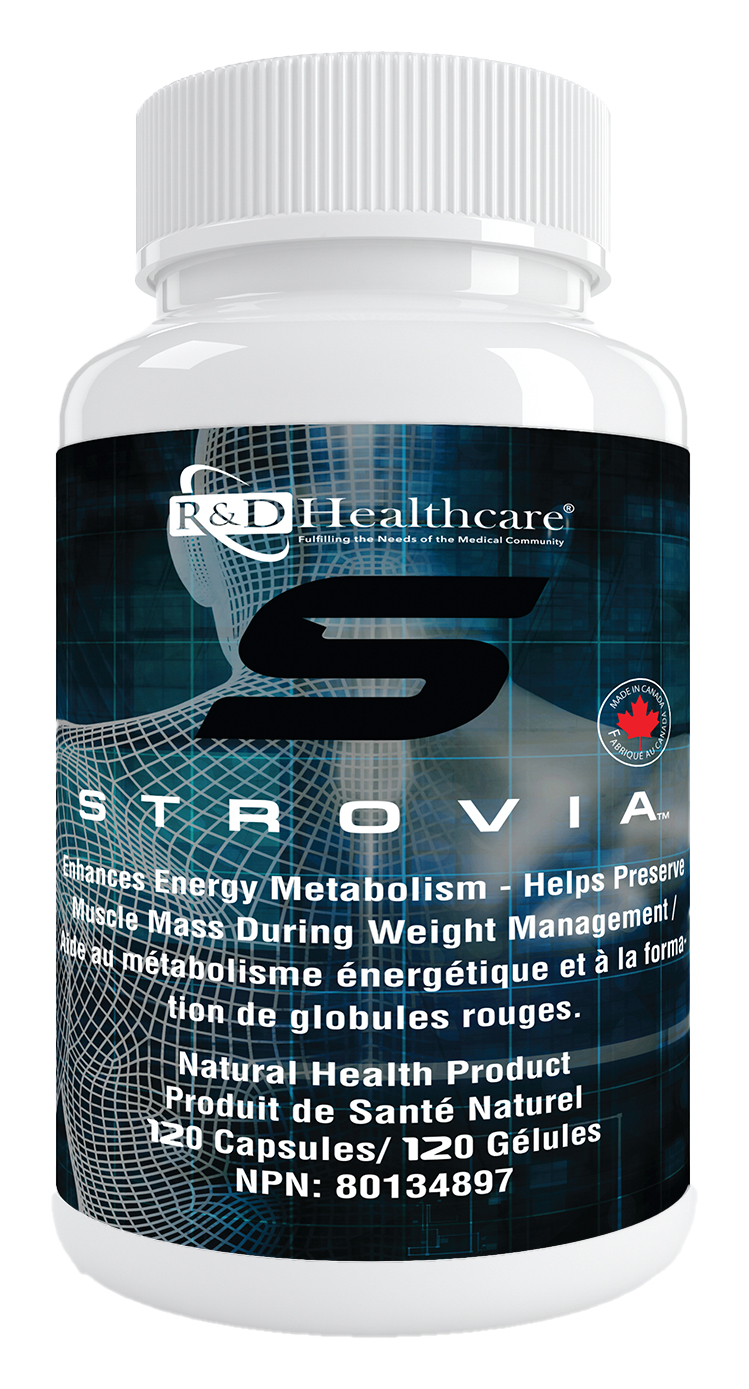
ThymoTropin™ The first natural dual-action myostatin inhibitor & TRPV3 activator.
A first-in-class, plant-derived nutraceutical platform that addresses the root biological cause of muscle loss — myostatin overexpression — while simultaneously activating TRPV3 channels for endurance, thermogenesis, and metabolic enhancement. Validated in a 60-day open-label human trial. Patents protected through 2040.
Targeting the root cause of muscle loss — not the symptoms.
Sarcopenia, GLP-1-induced muscle loss, cancer cachexia, and age-related muscle decline share a common driver: elevated myostatin signalling. Current standard-of-care interventions — protein supplementation, resistance training, anabolic steroids — address consequences, not cause. ThymoTropin™ is the first natural, orally bioavailable platform engineered to suppress myostatin and independently activate skeletal muscle's TRPV3-mediated endurance pathway.
The myostatin problem
Myostatin (GDF-8) is a TGF-β superfamily ligand that acts as the principal negative regulator of skeletal muscle mass. Its expression increases with age, immobility, chronic disease, and pharmacological weight loss (notably GLP-1 receptor agonists).
Pharmaceutical anti-myostatin agents — landogrozumab, taldefgrobep alfa, stamulumab, bimagrumab — have failed to reach approval, with safety signals and inconsistent efficacy halting development across the class. Yet the biological target remains validated, and the unmet need has expanded dramatically with GLP-1 adoption.
ThymoTropin™ delivers what the monoclonal class could not: clinically meaningful myostatin suppression with a clean safety profile and oral bioavailability.
Why a natural dual-action approach
Thymol and carvacrol — the monoterpene phenols characteristic of Thymus and Origanum species — exhibit two pharmacologically distinct activities that converge on skeletal muscle:
(1) Selective Smad2/3 signalling modulation, suppressing myostatin transcription and downstream proteolytic flux through MuRF1 and atrogin-1 pathways.
(2) TRPV3 channel activation on skeletal myocytes, triggering Ca²⁺ influx and the AMPK/PGC-1α axis that drives mitochondrial biogenesis and endurance.
The combination is patent-protected, plant-derived, GRAS-affirmed, and stable to 100 °C — manufacturable as capsules, gummies, powders, and functional beverages at ton-scale monthly output.
Addressable Population (estimated)
(US, 2025)
patients (global)
market by 2025
Two pathways. One molecule. Convergent outcomes.
ThymoTropin™'s active monoterpenes engage two independent receptor systems on skeletal myocytes. The downstream effects — anabolic preservation via Smad2/3 inhibition, and aerobic capacity via Ca²⁺/AMPK signalling — converge on functional muscle output.
TRPV3 Channel Activation
- Ca²⁺ influx triggers AMPK, NFAT, MEF2 and PGC-1α signalling cascade — the canonical endurance and oxidative-phenotype axis
- Myotube diameter +21–27% in C2C12 differentiation models; mitochondrial ATP cycling enhanced
- ↑ Thermogenesis in both upper and lower body compartments (preclinical, p<0.001)
- Exercise tolerance +135% on preclinical treadmill-to-exhaustion protocol
- Plasma thymol concentration achieved (28.7 → 73.7 ng/mL) sits within the validated TRPV3-activating range
Myostatin Suppression
- Serum myostatin −89.6% at day 60 in human Phase I open-label (84,608 → 8,781 pg/mL)
- Reduced muscle proteolysis via Smad2/3 signalling modulation; downstream UPS-pathway suppression
- Creatine kinase remained stable across the trial (−5.2 U/L, NS) — confirming target-tissue specificity without myocyte injury
- Preclinical muscle mass: quadriceps +7%, pectoralis +25% (p<0.05) with histologically confirmed fibre hypertrophy
- No off-target activin or BMP pathway interference — a clean profile differentiating ThymoTropin™ from prior anti-myostatin classes
Phase I human data — first-in-class outcomes.
A 60-day, open-label, dose-escalation Phase I study conducted under ICH-GCP, with statistical significance reached on the primary endpoint and corroborating signals on secondary functional and patient-reported endpoints. A randomised, placebo-controlled European trial is in progress.
| Endpoint | Baseline → Day 60 | Δ from baseline | Statistical test | Significance |
|---|---|---|---|---|
| Serum myostatin (pg/mL) | 84,608 → 8,781 | −89.6% | Paired t = 0.0068 Wilcoxon < 0.0001 |
Highly significant |
| Plasma thymol (ng/mL) | 28.7 → 73.7 | +157% | TRPV3-activating range | PK confirmed |
| Upper body strength | Baseline reference | +9.5% | p = 0.04 | Significant |
| Arm circumference | Baseline reference | +9.6% | Anthropometric | Trend |
| Creatine kinase (U/L) | Baseline reference | −5.2 | NS | No muscle damage |
| Subject acceptability (GAQ) | Patient-reported | 94.1% | Would continue | 82.4% recommend |
Safety Profile
- 21.1% reported AEs — all mild or moderate, gastrointestinal in nature
- AE frequency decreased at higher dose (11.8% at 80 mg/d vs 15.8% at 40 mg/d) — argues against dose-dependent toxicity
- Zero serious adverse events · Zero discontinuations
- All laboratory parameters remained stable through trial end: ALT, AST, BUN, creatinine, haemoglobin
- No clinically meaningful changes in vital signs or ECG
Real-World Evidence (Canada Post-Market)
- 20,000+ commercial units sold through Canadian DTC and retail channels
- Zero adverse events reported to Health Canada across all post-market surveillance
- Product holds active NHP designation (NPN) — Health Canada-approved natural health product
- Customer satisfaction tracking corroborates trial-phase GAQ outcomes
- Available as B2B premium ingredient for licensed formulators
Regulatory clearances across major markets.
The thymol–carvacrol active complex holds favourable regulatory standing across all priority jurisdictions, enabling parallel commercial deployment as both finished consumer product and B2B ingredient.
| Region | Designation | Reference | Status |
|---|---|---|---|
| United States | GRAS-affirmed (FDA) | Self-affirmed GRAS dossier on file | Granted |
| European Union | EU Flavouring Substance | Reg. (EC) No 1334/2008 Annex I | Listed |
| Canada | Natural Health Product (NHP) | Health Canada NPN | Commercial |
| Japan | Designated additive #45 | Japan Ministry of Health, Labour and Welfare | Listed |
| European Union | Randomised Controlled Trial | EU RCT — sarcopenia and GLP-1 cohorts | In progress |
Composition-of-matter and method-of-use protection through 2040.
Granted patents in the United States, the European Union, Portugal, and Canada cover both the composition of the active monoterpene complex and its method of use for muscle-related applications, providing defensible exclusivity across major commercial markets.
- US 11,135,178 — Applications of monoterpenes in muscle health
- EP 3191086 — Monoterpene formulations for muscle enhancement (EU + Portugal designation)
- CA 2,964,239 — Monoterpenes for myostatin regulation (Canada)
- Composition of matter — thymol/carvacrol/BioPerine® active complex
- Method of use — myostatin suppression for muscle preservation and growth
- Protection through 2040 — defensible exclusivity window across all granted jurisdictions
- Additional national-phase filings in active prosecution
A first-in-class asset entering an inflecting muscle-health market.
GLP-1 adoption has unmasked the muscle-mass cost of pharmacological weight loss, and the failure of the monoclonal anti-myostatin class has left an open category. Aging demographics, oncology supportive care, and consumer fitness segments converge on the same need.
Competitive landscape
The global muscle health and nutritional-support market is projected to exceed $15 billion by 2025. The category remains dominated by undifferentiated protein supplementation — neither targeted in mechanism nor optimised for the GLP-1 user profile.
Existing leaders such as Abbott's Protality™ (~$300M annual revenue, ~15% share) and Nestlé's Boost® (~$500M, ~25% share) compete on macronutrient density. ThymoTropin™ competes on mechanism — addressing the molecular driver of muscle loss with a clinically validated, patent-protected platform.
Veos is positioned to license, co-develop, or supply ThymoTropin™ as a premium B2B ingredient to manufacturers in functional foods, medical nutrition, sports nutrition, and pharmaceutical formulations.
ThymoTropin™ is open to strategic partnership.
Veos is in discussions with global nutrition, pharmaceutical, and functional-food companies for B2B ingredient licensing, regional distribution, and clinical co-development. Contact our team to request the full clinical dossier, IP package, or partnership term sheet.
Confidential — for partnership and investor evaluation purposes. Clinical data presented from Protocol VEOS-MS1000-001 (open-label, dose-escalation, n=21 enrolled, 17 per-protocol). Statistical significance determined by paired t-test and Wilcoxon signed-rank where indicated. A randomised, placebo-controlled European trial is in progress.
Statements have not been evaluated by the U.S. Food and Drug Administration. Product is not intended to diagnose, treat, cure, or prevent any disease. ThymoTropin™ is a trademark of Veos Pharmaceuticals, S.L. BioPerine® is a registered trademark of Sabinsa Corporation. Protality™ is a trademark of Abbott Laboratories. Boost® is a registered trademark of Société des Produits Nestlé S.A. References to third-party trademarks are for comparative purposes only and do not imply endorsement.
© 2026 Veos Pharmaceuticals, S.L. — CIF B10704534 · Madrid, Spain.